

What Is Experiential Therapy?
When talking about Experiential Therapy there tends to be an image that many of us have which usually includes a couch and talking about your feelings and thoughts. This image is generally what would be considered traditional talk therapy. Traditional talk therapy is a cornerstone of mental health care for many and I myself integrate it often into my therapy work. I also am a firm believer that sometimes it doesn’t work for everyone and at times it can be challenging to move from a thinking space into a felt space without looking beyond words.
When that is the case, exploring more experiential approaches and techniques can be helpful in bridging the gap and disconnect between experiences, thoughts and feelings. Experiential therapy is a dynamic and hands-on approach to therapy that utilizes action, creativity, and direct experience.
What is Experiential Therapy?
Think of it this way; you can talk about a lack of trust for hours, but the experience of successfully navigating a trust-building exercise with a horse or a fellow group member can create a powerful, felt sense of what trust can be. ‘It provides a hands-on approach that can lead to powerful emotional releases, new insights, fostering new communication and problem solving tools, and the building of new coping skills.
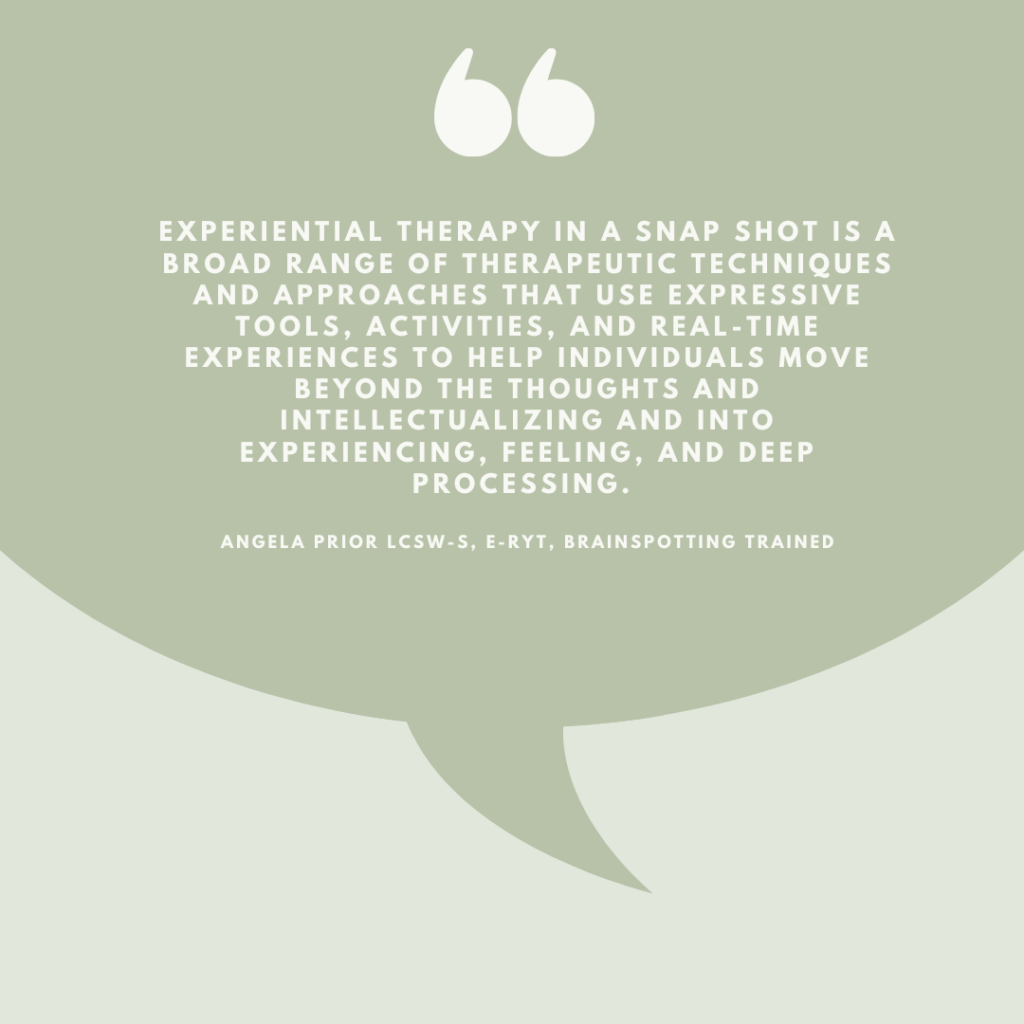
Experiential therapy in a snap shot is a broad range of therapeutic techniques and approaches that use expressive tools, activities, and real-time experiences to help individuals move beyond the thoughts and intellectualizing and into experiencing, feeling, and deep processing.
The roots of experiential therapy can be traced to psychotherapeutic traditions like Gestalt and existential therapy, which emphasize self-awareness in the present moment. It’s less about analyzing the past from a distance and more about bringing the feelings of the past into the present in a safe and guided way.
A Look at Different Experiential Approaches
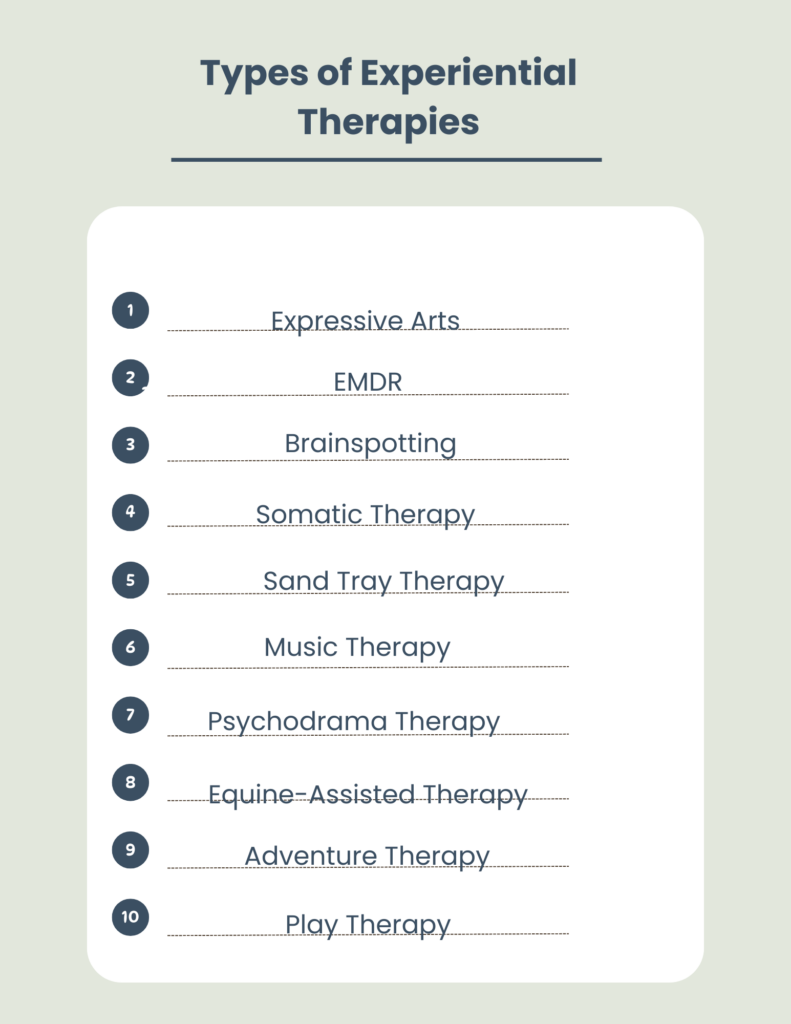
- Experiential therapy is not a one-size-fits-all model. It encompasses a wide array of engaging and innovative approaches. Here are some of the most common forms:
- Brainspotting: Operates on the profound theory that “where you look affects how you feel.” It uses the client’s field of vision to locate “Brainspots” specific eye positions that correlate with parts of the brain where trauma and emotional distress are held. It is experiential through using felt sense, focused mindfulness, and subcortical access. It can be utilized verbally or non verbally.
- EMDR (eye movement desensitization and reprocessing): is a structured, eight-phase therapy designed to reduce the distress associated with traumatic memories. The reprocessing phases are experiential, using bilateral stimulation (such as guided eye movements, taps, or sounds) to facilitate the brain’s natural information processing system.
- Somatic Therapy: founded on the principle that the body holds the story of our experiences, particularly stress and trauma. It is experiential by shifting the focus from the cognitive narrative of an event to the direct, felt sensations within the body.
- Yoga Therapy:Yoga therapy is the professional application of the principles and practices of yoga to address an individual’s specific physical, mental, and emotional health goals. It is an adjunct therapy so not to be used as a standalone mental health treatment. It is experiential by using physical movement, breathing, and body scans.
- Sand Tray Therapy: is a creative non-verbal therapy that allows individuals to express their inner world through the use of a sand-filled tray and a vast collection of miniature figures and objects. It provides a tangible, sensory-based medium for communication.
- Music Therapy: Whether it’s listening to a piece of music that evokes a strong memory, writing lyrics that tell your story, or playing an instrument to release tension, work with the brain’s reward system, neuroplasticity, stress reduction, processing, and memory & cognition.
- Equine-Assisted Therapy: Horses are highly attuned to human emotions and provide immediate, non-judgmental feedback. Activities like grooming, leading, and caring for a horse can help individuals develop trust, communication skills, and self-awareness.
- Adventure Therapy: This approach utilizes outdoor activities like hiking, rock climbing, ropes courses, and wilderness excursions to build confidence, resilience, and problem-solving skills. Facing and overcoming these physical challenges can translate into a greater sense of empowerment in other areas of life.
- Psychodrama: In psychodrama, individuals use role-playing to act out past events or challenging situations. This can provide new perspectives, allow for the safe expression of pent-up emotions, and offer a space to practice new ways of responding to difficult scenarios.
- Play Therapy: While often associated with children, play therapy can be beneficial for people of all ages. Using toys, games, and other playful activities, individuals can explore their feelings and experiences in a more natural and less intimidating way.
Who Can Benefit from Experiential Therapy?
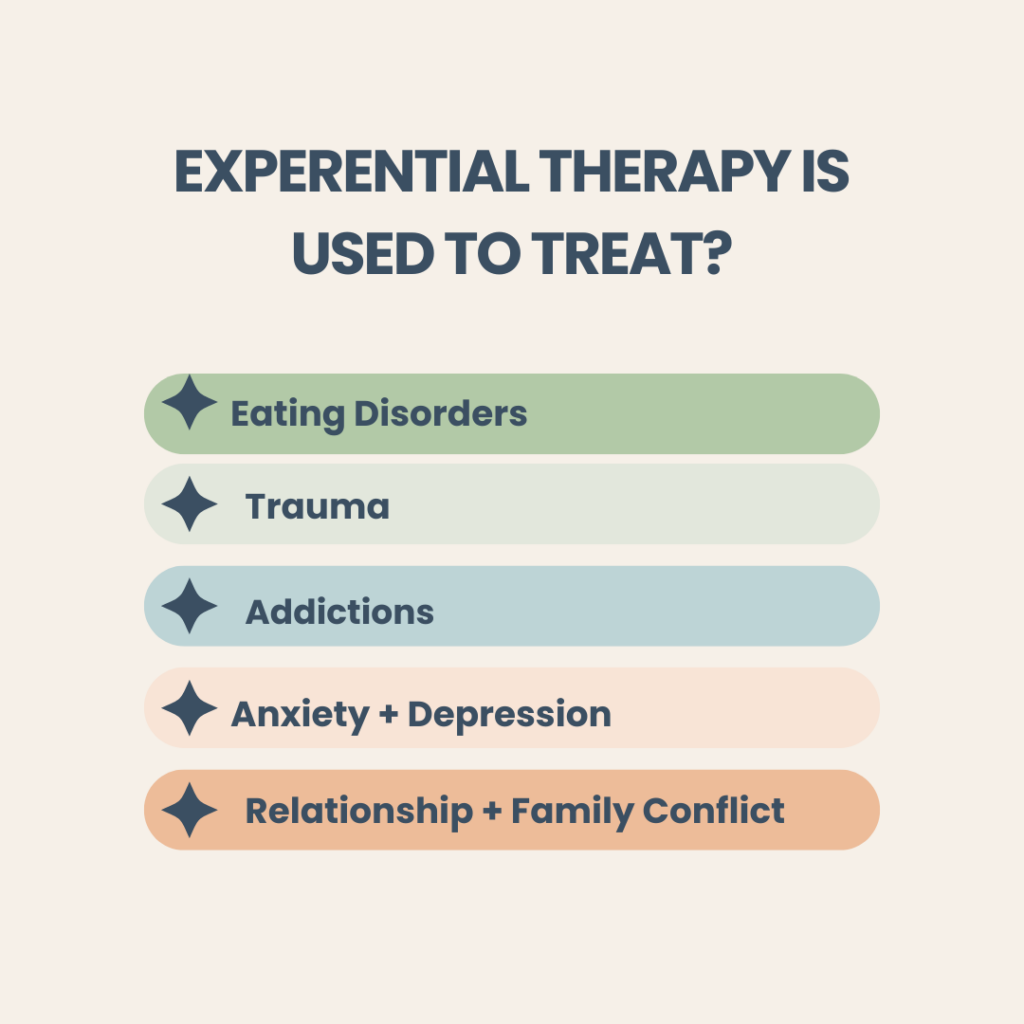
Experiential therapy is often used to treat:
- Trauma and PTSD
- Addiction and substance use disorders
- Eating disorders
- Grief and loss
- Anxiety and depression
- Relationship and family conflicts
- Behavioral disorders
The experiential approach can be particularly helpful for those who may find traditional talk therapy challenging, who feel “stuck” in their healing process, or who tend to intellectualize their emotions rather than truly feeling them.
Through fostering a connection between our mind, body, and senses, experiential therapy offers a holistic path toward healing that understands sometimes words aren’t enough.



eight free meditations
To Support Your Mental Health
Let's Work Together
Meet Our Team of Therapists + Yoga Instructors